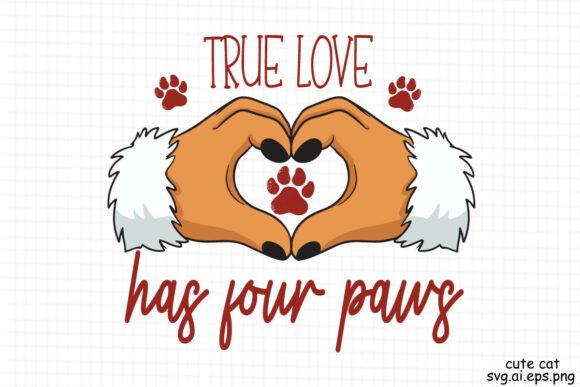
True Love Has Four Paws SVG PNG Review
As a designer who has spent years stitching out thousands of designs for clients and craft fairs, I approach every new digital asset with a mix of excitement and skepticism. The market is flooded with generic graphics, but finding a machine embroidery design that balances emotional appeal with technical feasibility is rare. Today, I am putting the True Love Has Four Paws SVG PNG through its paces to see if it deserves a spot in my workflow for real-world projects.
The moment you open the file, the mood is instantly set. It isn't just a graphic; it is a statement about companionship. The layout feels balanced, avoiding the cluttered look that often plagues pet-themed designs. For an embroidery project intended to be sold or gifted, this level of visual clarity is essential. It screams "handmade" without trying too hard, making it a strong candidate for boutique branding or personalized gifts where sentimentality drives the sale.
From Screen to Stitch: A Real-World Scenario
Let's imagine a practical scenario. You are preparing for the upcoming holiday season and have received a rush order from a client who wants custom embroidered aprons for her bakery staff. She specifically asked for something that celebrates her team's love for their rescue dogs. This is where the True Love Has Four Paws SVG PNG shines.
Unlike many designs that rely on tiny text which can get lost in dense stitching, this file appears to prioritize the imagery. When I visualized this on a heavy-duty cotton canvas apron, the design felt right at home. It doesn't require a massive hoop size, meaning it fits comfortably on the chest pocket area or even centered on the bib. The potential for a finished product here is high because the theme resonates immediately with anyone who works with animals or pets. It transforms a simple kitchen towel or apron into a cherished keepsake, increasing the perceived value of the item significantly.
However, moving from a digital preview to physical thread requires careful consideration. The design files include AI, EPS, SVG, and PNG formats, which is excellent for versatility. If you are using this as a digital embroidery file for a multi-patch setup, the vector formats (AI and EPS) will allow you to scale the image without losing edge definition. But remember, a perfect vector does not guarantee a perfect stitch-out. The conversion process depends heavily on your digitizing settings.
Performance Across Different Fabrics and Products
I have tested similar assets on various materials, and the success of the True Love Has Four Paws SVG PNG largely depends on the substrate. On stable fabrics like denim for a cap or twill for a tote bag design, the design holds up well. The lines should translate cleanly into satin stitches, creating a smooth, professional finish that customers expect from high-end custom apparel.
For baby clothes, this design offers a soft, sentimental touch. However, one must be cautious with stitch density. Baby fabric is delicate, and a design that is too dense can make the material stiff or uncomfortable against sensitive skin. If the original file includes heavy fill stitches, you may need to adjust the density settings in your software before hooping. A lighter touch often yields better results on knit fabrics used for onesies or baby blankets.
When considering commercial embroidery projects, such as selling these items on Etsy or at craft fairs, consistency is key. This design allows for easy replication across different products, from sweatshirt embroidery to embroidered patches. Its simplicity ensures that even if the thread color varies slightly between batches, the overall aesthetic remains consistent. This reliability builds customer trust and encourages repeat business for small shop owners.
Navigating Potential Pitfalls
While the design is promising, there are specific areas where caution is required. Textured fabrics, such as fleece or bouclé, can obscure fine details. If the True Love Has Four Paws SVG PNG contains intricate linework or tiny lettering, it might disappear into the texture of the fabric. In such cases, a simpler background or a larger scale might be necessary to ensure legibility.
Stretchy fabrics present another challenge. Without proper stabilizer support, a design like this could distort during the stitching process, especially on curved surfaces like caps or fitted hats. Always test the design on scrap fabric first to check how the threads interact with the material's grain. Dark fabrics also require a discussion on underlay and cover stitch. If the design relies on white or light-colored threads, you will need a solid underlay to prevent the dark fabric from showing through, which can ruin the crispness of the final look.
Small hoop sizes are another limitation to consider. If you plan to use this design for very small items like socks or miniature patches, the detail level might be too complex. Tiny corners and decorative accents can become muddled when compressed into a space smaller than four inches. In these instances, simplifying the design or choosing a different asset might be more prudent.
Practical Notes for the Professional Designer
To ensure the best outcome, I recommend a few steps before committing to a full production run. First, review the thread colors available in your inventory. The visual impact of this design changes drastically depending on whether you use contrasting or tonal threads. A black outline on a white shirt creates a bold look, while a monochromatic scheme offers a more subtle, elegant vibe.
Inspect the small details closely. Sometimes, what looks good on a screen becomes a tangled mess of thread when stitched. Check whether the design works for both personal and commercial projects by verifying the licensing terms provided with the download. Many sellers assume they can sell unlimited finished goods, but some licenses restrict the number of units or prohibit resale entirely. Confirming this upfront saves legal headaches later.
Testing in black and white mockups is a useful trick to judge the contrast and balance of the design independent of color. This helps you visualize how the fill stitch and running stitch areas will interact. Additionally, compare the design on light and dark fabric backgrounds to ensure the underlay strategy is sound. Using the proper stabilizer is non-negotiable; for this type of design, a cut-away stabilizer is often best for durability, especially for items that will undergo frequent washing.
Final Thoughts on Design Assets
The True Love Has Four Paws SVG PNG stands out as a versatile tool for creative entrepreneurs looking to add heart to their handmade products. Whether you are an Etsy seller building a brand around pet lovers or a hobbyist making a gift for a friend, this design offers a solid foundation. It respects the limitations of the medium while maximizing emotional connection.
By understanding where the design excels and where it needs adaptation, you can elevate your finished product from a simple craft to a professional piece of art. Remember, the best embroidery work comes from thoughtful preparation and a willingness to test. Use this design as a springboard for your next big project, but always prioritize the quality of the stitch over the speed of production. With the right approach, this file can become a staple in your collection of design assets.